

As you evaluate 2026 security guard services, the question is straightforward- did your provider fully protect your facility in 2025? If missed shifts, poor management oversight, or slow communication were ongoing issues, this guide will help you decide whether that contract deserves renewal, or if it’s time for a more reliable partner in 2026.
January is when many property managers review vendor contracts. Security guard agreements are often renewed automatically, even when last year’s service didn’t meet expectations.

When Security Coverage Fails, Costs Accumulate
Substandard security protection creates financial exposure beyond obvious theft concerns. The U.S. Small Business Administration research demonstrates how security deficiencies contribute to preventable losses- vandalism incidents, liability claims, and asset compromise that adequate security would have stopped.
Poor security is easy to spot. Guards miss shifts. Supervisors are hard to reach. Your own staff ends up filling gaps that shouldn’t exist. Issues come up that could have been avoided if the account was managed properly. January 2026 is when you can step back and evaluate your provider’s service. Contracts are coming up for renewal, budgets reset, and you have a full year behind you to judge whether your security company did their job or made things harder than they should have.
Assess your current security provider against these five operational requirements. Three or more failures indicate foundational problems with the security company’s business model, not individual guard performance issues.
Requirement 1- Coverage Reliability
The standard- Every scheduled security post gets staffed by qualified, trained guards. Guard call-offs trigger immediate deployment of backup officers already familiar with your site.
Problem indicators-
- Arriving at your facility to discover the security post unstaffed
- Receiving short-notice calls that coverage won’t happen
- Being told to “make do” without security until replacement found
- Coverage failures occurring multiple times annually
How capable companies operate- Maintaining site-trained backup rosters eliminates coverage gaps. Staffing problems get resolved through internal systems before clients experience impact. You shouldn’t discover their operational failures through an unstaffed security post.
Industry research from the Security Industry Association confirms that dependable shift coverage represents the fundamental dividing line between professional security operations and companies operating without adequate infrastructure.
Requirement 2- Active Management Presence
The standard- Field operations managers conduct weekly facility visits, personally inspecting guard performance, verifying procedure compliance, and addressing emerging concerns before they escalate.
Problem indicators-
- Guard performance quality fluctuating unpredictably
- Absence of any regular management presence at your location
- Guards reporting only to distant corporate management
- Documented concerns generating no corrective action
How capable companies operate- Scheduled weekly management visits maintain consistent security standards through direct oversight. Field managers verify guards meet professional appearance requirements, execute post orders correctly, and maintain proper conduct.
The security industry suffers from a structural weakness. Many companies assign guards “site supervisor” duties, requiring them to simultaneously handle protective responsibilities, scheduling coordination, payroll administration, and operational management. This arrangement compromises their primary security mission. Professional security operations maintain distinct management roles, enabling guards to concentrate exclusively on facility protection.

Requirement 3- Management Accessibility
The standard- Direct communication channels to operations managers possessing authority to resolve issues. No voicemail systems, extended response delays, or communication restricted to frontline personnel lacking decision-making power.
Problem indicators-
- Management unreachable outside standard business hours
- Guards lacking contact information for immediate management support
- Emergency situations requiring navigation of automated phone systems
- Reported problems remaining unresolved indefinitely
How capable companies operate- Dedicated management hotlines connect directly to field supervisors maintaining 24/7 availability. Security incidents at 3 AM demand immediate management guidance, not voicemail messages and next-business-day callbacks.
Requirement 4- Comprehensive Pre-Deployment Training
The standard-Guards complete thorough site-specific training before working independently. Training encompasses facility layout mastery, emergency response protocols, equipment operation, and client-specific procedures.
Problem indicators-
- New guards acquiring facility knowledge while working alone
- Guards demonstrating unfamiliarity with emergency procedures
- Continuous turnover necessitating perpetual training cycles
- Guards unable to answer fundamental facility questions
How capable companies operate- Site training occurs before independent deployment. Guards demonstrate facility layout knowledge, comprehend security priorities, and exhibit system competency before solo assignments.
Strong training can help to reduce employee turnover. Guard turnover creates costs beyond recruitment expenses. It means continuously training replacement personnel while service quality deteriorates during learning phases. Excessive turnover signals underlying problems with company compensation practices, management quality, or working conditions.
Requirement 5- Technology-Verified Accountability
The standard- Technology platforms document guard activities through automated daily reporting, GPS-verified checkpoint completion, incident logging, and performance metric tracking.
Problem indicators-
- No verification that assigned patrols occurred
- Handwritten incident reports with inconsistent formatting
- Inability to confirm guard arrival/departure times
- Absence of performance measurement data
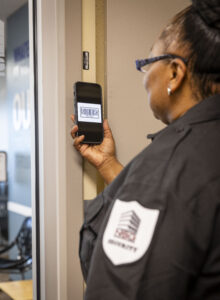
How capable companies operate- Contemporary security operations employ mobile technology documenting patrol execution through GPS verification, timestamped checkpoint scanning, and immediate incident reporting. Accountability KPIs provide complete transparency regarding guard activities throughout each shift.
Operating without documentation systems means trusting security company assertions without independent verification. The technology exists to eliminate this uncertainty; professional providers implement it.
2026 Security Guard Assessment Results Interpretation
Calculate total requirement failures from the five criteria above:
0-1 requirement failures- Security service meets professional operational standards
2 requirement failures- Operational deficiencies requiring immediate corrective action
3+ requirement failures- Foundational problems necessitating provider replacement
Three or more failures indicate deep organizational dysfunction. These aren’t individual performance problems, rather they reflect how the security company structures and operates its business. Such deficiencies don’t improve through patience; they require a different security provider.
Vetting Alternative 2026 Security Guard Providers
When evaluating potential security providers, asking the right questions can show whether they truly manage operations well:
“How do you handle coverage gaps?”
A strong answer: backup officers are ready to step in immediately if someone can’t make a shift. Weak answer: “We’ll try our best to find coverage” or “The shift may go unstaffed temporarily.”
“How often do managers inspect client sites?”
Look for regular, scheduled inspections by operations managers who actively check performance and address issues. Weak answers include vague responses like “As needed” or “When problems come up.”
“Do guards handle administrative tasks?”
Ideally, guards focus on security while operations staff manage scheduling, reporting, and other administrative responsibilities. Weak providers rely on guards to handle paperwork or scheduling themselves.
“How is guard performance tracked?”
Strong management uses systems that provide clear accountability and real-time reporting. Weak answers are vague, inconsistent, or rely solely on paper logs.
January 2026: Strategic Timing Advantages
Multiple factors make early 2026 optimal for security provider transitions:
- Fiscal alignment- Security contracts synchronize with annual budgeting cycles, preventing mid-year financial complications.
- Performance documentation- Complete 2025 operational history provides objective evidence of provider performance or failure.
- Labor market conditions- Post-holiday staffing markets strengthen, enabling faster quality hiring and deployment.
- Contract cycles- Many security agreements operate on annual renewal schedules, making January the natural evaluation point.
Your 2025 experience provides data for your 2026 decision. Recurring problems indicate organizational deficiencies requiring a different provider, not renewed patience.
NSG Security: 35+ Years Protecting Greater Cincinnati
NSG has delivered security guard services across Greater Cincinnati since 1988, developing operational systems that prevent industry-common problems:
- Flex officer program- Site-trained backup guards eliminate missed shift occurrences
- Weekly facility inspections- Operations managers maintain quality through scheduled onsite oversight
- 24/7 management hotline- Direct phone access to local decision-makers ensures immediate support
- Separated management roles- Guards concentrate exclusively on security while dedicated staff handles administrative functions
- Accountability verification- Technology platforms document all guard activities and patrol completion
- Workforce stability- Professional management and competitive compensation retain experienced security personnel
Security should reduce problems, not create them. That means guards who show up, supervisors who stay involved, and a management team that responds when issues come up. That is the standard we hold ourselves to.
As you review how your security performed in 2025, be honest about what worked and what did not. If your current provider struggled to meet basic expectations, 2026 is the right time to set higher standards and choose a more reliable partner.
NSG provides security guard services throughout Greater Cincinnati and surrounding communities. Family owned since 1988. Contact us to discuss your security needs at (513) 621-5018 or by filling out this form.