

Most people think of a security officer as someone who responds when something goes wrong. A theft. An unauthorized visitor. A disturbance in the parking lot. That is part of the job, but for a good security guard, it is not all.
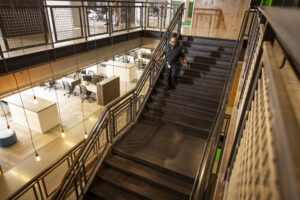
In many facilities, security is treated as a reactive function. Someone shows up, patrols, and responds when needed. The problem is that this approach ignores a much larger value opportunity. Security staff are often the only people in a building overnight, in mechanical spaces, loading docks, stairwells, and other areas that rarely get regular oversight. That position creates visibility into issues long before they become incidents.
When that visibility is not used, facilities end up paying for problems that could have been caught earlier.
Small Issues Become Expensive When No One Notices
Many of the costliest facility issues do not start as emergencies. They start as small, visible changes that go unreported.
Roof leaks, for example, are a major source of commercial property damage. Plumbing failures and sprinkler issues also account for a significant portion of claims. These problems often build slowly over time. A small drip becomes staining. A minor blockage turns into standing water. A loose fitting eventually fails completely. By the time the issue is discovered during business hours, the damage is already done. Repair costs increase, and in some cases operations are disrupted.
A trained security officer who notices a ceiling stain forming, hears unusual water flow, or identifies pooling in a mechanical area can help surface that issue early. That does not eliminate the problem entirely, but it often changes the outcome from a major loss to a manageable repair.
What a Trained Security Presence Actually Sees
The most valuable observations in a facility are rarely obvious. They are small details that change over time.
A strong security program should include clear expectations for what gets observed and reported during a shift. That includes physical plant conditions such as leaking fixtures, unusual mechanical noise, standing water, or doors that do not close or lock properly. While these may appear to be maintenance items, they often overlap with safety and liability risks.
Lighting is another example. Burned out lights in stairwells, parking areas, or loading zones do more than reduce visibility. They increase liability exposure and create conditions where incidents are more likely to occur. Early reporting allows maintenance teams to address issues before they escalate.
Security staff are also often the first to see contractor activity. Who entered the building, when they arrived, and where they worked are all important details when something does not add up later. Without that visibility, small issues can become unresolved questions.
Even simple behavioral patterns matter. A vehicle left in the same area for multiple days or an access point used outside of normal activity patterns may not indicate a problem, but it is still worth documenting. Over time, those observations help identify trends that would otherwise go unnoticed.
Documentation Creates Operational Value
Observations only create value when they are recorded and communicated clearly. Consistent reporting turns individual shift activity into a usable record of facility conditions. Over time, that record becomes a reference point for maintenance planning, vendor accountability, and incident investigation.
For example, documented notes can help clarify responsibility when damage is disputed. They can support insurance timelines when claims are filed. They can also help identify recurring issues in specific areas of a building that may require long term attention rather than repeated short term fixes. Without documentation, those insights are lost. With it, they become part of how a facility is managed.
Security as Part of Facility Operations
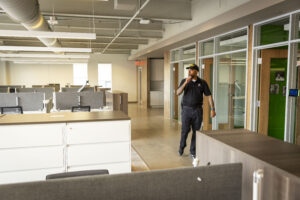
In well-run environments, security is not isolated from operations. It is part of the broader facility function. The most effective programs treat security staff as an extension of the operations team, not just a presence at the door. That means training people to observe, report, and communicate issues clearly, not just respond to incidents.
When security teams understand that role, they naturally become more engaged with the condition of the building. A water stain is not just something to walk past. A faulty door is not just a minor inconvenience. These details become part of maintaining the overall health of the facility.
The Bottom Line
Security is often evaluated based on response. But its real value in many commercial environments comes from what gets noticed before a response is ever needed. When security teams are trained only to react, facilities miss opportunities to prevent avoidable issues. When they are trained to observe and report as part of their role, they contribute to both safety and operational awareness.
At NSG, we build consistent teams that learn your site, understand your routines, and are trained to recognize when something is not normal for your facility. That familiarity helps our officers notice small changes early, document issues clearly, and communicate them to your team in real time. The goal is not just presence on site, but continuity, attention to detail, and a more informed picture of what is happening in your building day to day.
Contact NSG today for a free, no-obligation security assessment and quote.