

For decades, the security industry has measured performance largely through activity. Did the officer show up? Did the officer complete the patrols? Did the officer document the incident? All of these things matter, but they don’t tell you whether a security program is actually performing well overall.
An officer can complete every scheduled tour while problems develop in the background. A site can appear fully staffed while late arrivals, missed checkpoints, recurring exceptions, or coverage issues slowly become a pattern. Looking at one shift at a time makes those problems easy to miss. However, looking at hundreds of shifts together tells a different story and can help proactively prevent issues.
Most Security Companies Collect Data. The Difference Is What Happens Next.
Most security companies generate information: attendance, tour completion, checkpoint activity, incidents, exceptions, manager visits, training records, and more. Security metrics support the value proposition of an organization’s security operation. Without compelling metrics, security professionals and their budgets continue largely on the intuition of company leadership. Collecting information isn’t the hard part. Instead, the challenge is using it effectively.
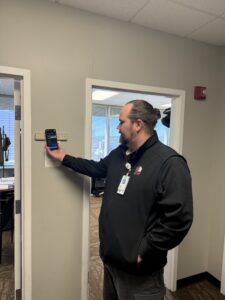
At NSG, we utilize a technology platform that gives our management team visibility into performance across sites, shifts, and time periods. Instead of treating every exception as an isolated event, we can identify trends and focus management attention where it’s actually needed.
As a result, we can ask better questions:
- Does the same checkpoint keep getting missed?
- Do exceptions occur more frequently on a certain shift?
- Does one location generate more issues than comparable sites?
- Are attendance problems beginning to trend in the wrong direction?
A manager can’t realistically read thousands of individual timestamps and reports and recognize every developing trend. Technology, however, makes those patterns easier to see.
For example:
A 20-minute patrol gradually becomes a 12-minute patrol. One shortened tour might mean nothing. However, a consistent change over several weeks deserves attention.
The same checkpoint keeps getting missed. Instead of treating each occurrence as a one-off, we can recognize that something about the post, route, training, or officer performance needs attention.
One site begins generating more exceptions than others. As a result, management has a reason to increase oversight and determine what’s driving the change.
Attendance starts slipping gradually. Rather than waiting until a call-off creates an uncovered post, management can address the trend earlier.
Ultimately, the point isn’t simply to collect more data. It’s to make that data useful.
Technology Tells Us Where to Look. Our People Decide What to Do.
More technology doesn’t mean less human involvement. In fact, for us, it’s the opposite. Technology gives our Operations Managers, General Manager, and leadership team better information about where they should focus their attention. Our people then provide the context, judgment, and follow-through.
If the data shows a recurring problem tied to a particular post, shift, or officer, we don’t just record another exception. Instead, we investigate why it’s happening. That may lead to a site visit, coaching, retraining, a staffing adjustment, a change to the post orders, or additional oversight.
The goal isn’t to replace an experienced security manager’s judgment with software. Rather, the goal is to give that manager better information so they can focus their time where it will have the greatest impact.
Technology provides visibility. Our people provide accountability.
Identify. Investigate. Act. Follow Up.
Security problems rarely appear without warning. Before a larger problem develops, there may be missed checkpoints, repeated late arrivals, call-offs, unusual exceptions, or a gradual decline in performance. Individually, those events can look minor. Together, however, they can reveal something that needs attention.
Our approach is straightforward.
Identify.
First, our technology helps surface missed or incomplete tours, attendance issues, exceptions, incidents, recurring concerns, and performance trends.
Investigate.
Next, our management team reviews what’s happening, visits the site when necessary, speaks with officers and client leadership, and determines the cause.
Act.
From there, we take the appropriate action. For example, that could mean coaching, retraining, adjusting staffing, updating post orders, or increasing management oversight.
Follow up.
Finally, we continue watching the issue to determine whether the corrective action actually worked.
Finding an exception is easy. More importantly, closing the loop and making sure the problem doesn’t continue is what turns information into accountability.
From Proving Activity to Managing Performance
If you manage a facility, knowing that an officer clocked in isn’t enough. You also need to know that someone is paying attention to what happens after they arrive.
Are officers completing patrols correctly? Do the same issues keep happening? Is performance improving or declining? When something starts going wrong, is anyone catching it? And most importantly, is someone following through?
That’s the difference between documenting security activity and actively managing a security program.
At NSG, our security programs combine technology with hands-on management to provide better visibility into what’s happening at your facility. From officer attendance and patrol activity to site visits, exceptions, and performance trends, our goal is to identify issues early, address them, and follow through.
If you’re looking for a security partner that takes accountability seriously, NSG provides professional security guard services backed by local management, technology, and a team committed to your facility. Contact us today for a free, no-obligation security assessment and quote.